
How Long Does a Polynesian Tattoo Take? Session Guide
8/28/2026
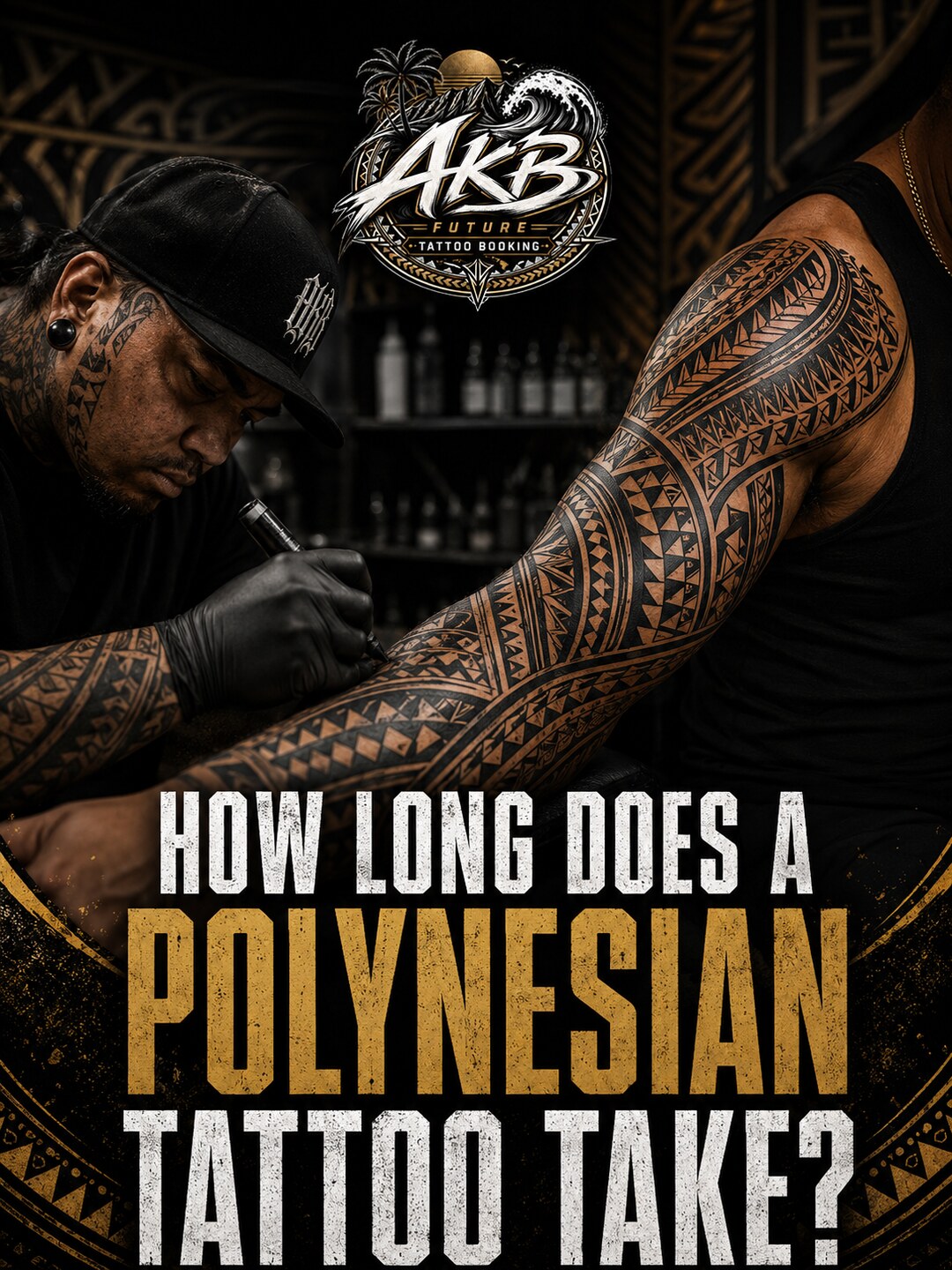
Polynesian tattoo session length, how long does a tribal tattoo take, Polynesian sleeve tattoo time, tattoo session preparation
If you are thinking about getting a Polynesian tattoo, one of your first questions may be: How long will it take?
The honest answer is that every tattoo is different. A smaller piece may be completed in one appointment, while a full sleeve, chest panel, leg sleeve, or back piece can require several long sessions.
Polynesian tattooing is especially detailed. The artist is not simply filling an empty area with a repeated pattern. A well-designed piece should follow the shape of your body, connect naturally with your existing tattoos, and use patterns intentionally. That planning is part of the process—and it should not be rushed.
Average Polynesian Tattoo Times by Size
The following ranges are general estimates, not guaranteed appointment times. Every artist works differently, and your design, placement, skin, and ability to sit can all change the timeline.
Tattoo projectGeneral time estimateSmall accent or band2–4 hoursShoulder cap4–7 hoursForearm piece5–8 hoursHalf sleeve8–15 hoursFull arm sleeve15–30+ hoursHalf chest panel6–12 hoursFull chest and shoulder15–30+ hoursLower-leg sleeve12–25+ hoursFull leg sleeve25–50+ hoursFull back piece30–60+ hours
Large projects are normally divided into multiple appointments. Your artist may work on one complete section at a time or build the tattoo in stages so the overall design stays balanced.
What Determines How Long the Tattoo Takes?
1. The size of the tattoo
Size is the most obvious factor. A forearm piece covers much less space than a full sleeve or back piece. However, two tattoos of similar size may still take very different amounts of time depending on their detail and placement.
2. The complexity of the design
Dense patterns, small details, solid black areas, and precise linework take time. A design with more open space may be completed faster than one containing tightly packed patterns and heavy shading.
With Polynesian work, clean spacing and consistency matter. Moving too quickly can affect the symmetry, flow, and readability of the finished tattoo.
3. Whether the design is drawn freehand
Many Polynesian tattoo artists draw directly on the body before tattooing. This allows them to shape the artwork around your muscles, joints, movement, and natural body lines.
That drawing time is part of your appointment. The freehand process may take an hour or longer for a large project, but it helps create a tattoo made specifically for your body instead of forcing a premade design onto it.
4. The placement on your body
Some body parts are easier to tattoo than others. Arms and flatter areas may be more straightforward, while ribs, knees, elbows, stomachs, and other curved or sensitive areas can require slower, more careful work.
Placement also affects how easily you can remain still. If an area is especially painful, you may need more breaks, which can extend the appointment.
5. Your pain tolerance and ability to sit
Some clients can comfortably sit for eight hours. Others begin struggling after three or four. Neither experience makes someone tougher or weaker—bodies simply respond differently.
Being well-rested, properly fed, and hydrated can make a major difference. If you are moving frequently or need many long breaks, the artist will naturally complete less during that session.
6. Your skin and existing tattoos
Skin texture, scarring, stretch marks, and previous tattoos can affect how quickly an artist works. A cover-up or extension must be carefully designed so the new patterns connect properly and the finished piece looks intentional.
Why Large Polynesian Tattoos Usually Require Multiple Sessions
There is a limit to how much stress your skin and body should take in one day. Even if you want to complete a large project immediately, stopping at the right time can produce a better result.
Multiple sessions allow:
Each section to be completed carefully
Swelling and irritation to settle
The artist to maintain clean, consistent work
You to recover physically between appointments
The design to be adjusted as the project develops
Your artist may recommend completing sessions several weeks apart so each area has time to heal before the next appointment.
Is One Long Session Better Than Several Short Sessions?
Not necessarily. A longer appointment can help complete more of the tattoo at once and may reduce the number of trips you need to make. However, the quality of the work should always come before finishing as quickly as possible.
Several shorter sessions may be better if you have a low pain tolerance, a difficult placement, sensitive skin, or a very large project. The best schedule is the one that allows your artist to perform strong work while keeping the experience manageable for you.
Does the Consultation Count Toward the Tattoo Time?
Usually, the consultation and tattoo appointment are separate parts of the process. During the consultation, you may discuss:
The area you want tattooed
The approximate size and coverage
Personal meaning or ideas you want represented
Existing tattoos that must be connected or worked around
Your budget and preferred schedule
The artist’s estimated number of sessions
If your artist draws the design freehand on the day of your appointment, that drawing time may be included in the session. Ask your artist or booking manager how that particular artist structures appointments and pricing.
How to Prepare for a Long Tattoo Session
Preparing properly can help you sit more comfortably and keep the appointment moving.
Get a full night of sleep.
Eat a substantial meal before arriving.
Drink plenty of water in the days leading up to the appointment.
Avoid alcohol before your session.
Wear clean, loose clothing that provides easy access to the tattoo area.
Bring approved snacks and drinks for longer appointments.
Charge your phone and bring headphones or another quiet distraction.
Follow your artist’s instructions about shaving or trimming the area.
Arrive on time so the artist has the full scheduled session available.
For more guidance, read our article on how to prepare for a tattoo appointment.
Do Not Choose an Artist Based Only on Speed
A fast artist is not automatically a better artist, and a slower artist is not necessarily less experienced. Artists have different techniques, machines, design processes, and standards for detail.
Instead of asking who can finish the tattoo fastest, look for an artist whose work matches the style you want. Review healed tattoos, study the artist’s linework and pattern flow, and choose someone with experience designing for your placement and body shape.
A permanent tattoo is worth the time it takes to do correctly.
Frequently Asked Questions
Can a Polynesian half sleeve be finished in one day?
Sometimes. A simpler half sleeve may be completed during one long appointment, while a larger or more detailed design may require two or more sessions. Your artist must see the placement and understand the desired coverage before giving an accurate estimate.
How many sessions does a full Polynesian sleeve take?
A full sleeve may take approximately three to six or more sessions. The exact number depends on session length, design detail, arm size, pain tolerance, and the artist’s working process.
How long is a full-day tattoo session?
Full-day appointments commonly reserve six to eight hours, but not all of that time is spent actively tattooing. The appointment may also include consultation, freehand drawing, stencil placement, setup, breaks, photos, and aftercare instructions.
Can I finish a large tattoo on consecutive days?
Some artists offer consecutive-day sessions, particularly for clients traveling from another state or country. Whether that is appropriate depends on the areas being tattooed, the amount of swelling, your health, and the artist’s process. This should be planned with the artist before booking.
Can an artist give me an exact completion time from a photo?
A photo can help provide a rough estimate, but it may not show the body’s full shape, exact measurements, skin condition, or all existing tattoos. Clear photos, placement measurements, and a detailed description will help the artist provide a more useful estimate.
Ready to Plan Your Polynesian Tattoo?
AKB Future helps connect clients with experienced tattoo artists whose work matches the style, placement, and scale of the project.
Send us your tattoo idea, placement, reference images, and photos of the area you want tattooed. We will help you find the right artist, understand the booking process, and plan the appropriate amount of time for your project.
Submit your tattoo inquiry through AKB Future to get started.
Ready to book?
Submit an inquiry and AKB Future will match you with the right artist.
Start Booking Inquiry