
How Much Does a Polynesian Tattoo Cost? What Determines the Price
8/12/2026
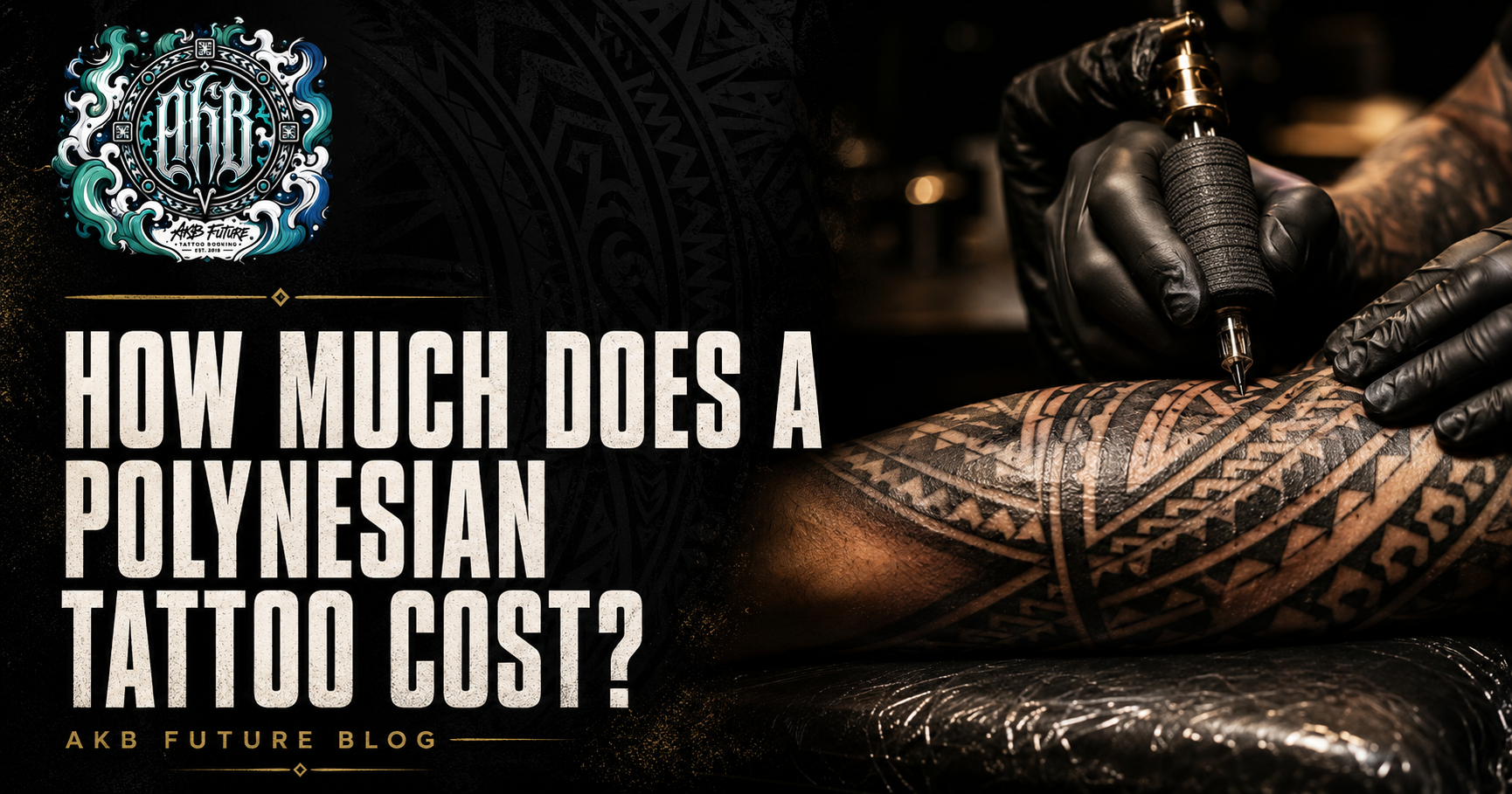
Learn how much a Polynesian tattoo may cost, including estimated prices for forearms, half sleeves, full sleeves, chest pieces, and leg tattoos—and what determines your final quote.
One of the first questions clients ask is, “How much does a Polynesian tattoo cost?”
The honest answer is that there is no universal price. A small custom piece may cost several hundred dollars, while a detailed sleeve, chest panel, leg sleeve, or back piece can require multiple sessions and several thousand dollars.
Polynesian tattooing is usually designed specifically for the wearer. The artist must consider your story, body shape, placement, coverage, pattern density, and the way the composition moves across the body. That makes it very different from choosing a small, pre-drawn design with a fixed price.
This guide will help you understand the likely investment, what affects the final quote, and what information to send when requesting an estimate.
Average Polynesian Tattoo Cost by Size
The following ranges are general planning estimates for custom work in the United States. They are not guaranteed prices. Every artist sets their own rates, and the actual quote may be lower or higher depending on the project.
Tattoo projectGeneral planning rangeSmall standalone piece$300–$800+Forearm piece$800–$2,500+Upper-arm or shoulder piece$1,000–$3,000+Half sleeve$1,500–$4,000+Full arm sleeve$3,500–$8,000+Half chest or chest panel$1,500–$4,000+Calf or lower-leg piece$1,000–$3,500+Full leg sleeve$5,000–$10,000+Large back or body project$5,000–$12,000+
An artist may charge by the hour, by the session, by the day, or by the complete project. Established custom tattoo artists commonly charge approximately $150–$300 or more per hour, while full-day sessions can range from roughly $800 to $2,000+. Highly sought-after or traveling artists may charge more.
The most useful number is not always the hourly rate. A faster, more experienced artist charging a higher rate may finish a project in less time than someone with a lower hourly rate. Look at the estimated total, quality of the work, and confidence you have in the artist—not just the price per hour.
What Determines the Price of a Polynesian Tattoo?
1. Size and Amount of Coverage
Size is one of the biggest pricing factors, but it is not only about inches.
A full sleeve must wrap around the entire arm and remain balanced from every angle. A half sleeve with complete coverage may require more time than a larger, open design with considerable negative space. Artists therefore look at the total surface area, how far the design wraps, and how much of the skin will be tattooed.
When requesting a quote, be specific. “Arm tattoo” could mean a small outer-bicep piece, a shoulder cap, a half sleeve, or complete shoulder-to-wrist coverage.
2. Body Placement
Some areas are more challenging and time-consuming than others. Arms and calves often provide relatively accessible working surfaces. Ribs, sternum, chest, knees, elbows, hands, neck, and areas that wrap heavily around the body may require slower and more technical application.
Placement also affects the design process. A Polynesian composition should move naturally with the muscles and structure of the body. Building that flow across the chest, shoulder, arm, or leg takes planning and experience.
3. Detail and Pattern Density
Two tattoos covering the same area can have very different prices.
A bold composition with larger sections and more open skin may be completed faster than a highly detailed design containing tight patterns, small transitions, extensive black fill, or intricate linework. More detail typically means more design time, slower application, and potentially additional sessions.
4. The Artist’s Experience and Demand
An artist’s price reflects more than the time spent holding the tattoo machine. You are also paying for years of practice, cultural and artistic knowledge, drawing ability, design judgment, consistency, sanitation, professional equipment, and the skill required to make the tattoo fit your body.
Artists with strong portfolios, recognizable styles, healed results, and long waiting lists often charge higher rates. A specialist may also be more efficient because they have spent years developing the exact style you want.
5. Custom Design and Freehand Work
Many Polynesian tattoo artists design directly on the body using markers before tattooing. This allows them to account for your anatomy and create a composition that flows with your movement.
That freehand process is part of the service. The artist may spend significant time discussing your ideas, laying out the design, adjusting its balance, and connecting each area before the tattooing begins.
You are not simply purchasing ink and hours. You are commissioning an original piece built specifically for your body.
6. Number and Length of Sessions
Small pieces may be completed in one appointment. Larger work commonly requires multiple sessions.
A full sleeve might be completed over several full-day appointments, depending on the artist’s speed, the level of detail, your pain tolerance, swelling, and how long you can sit safely. A full leg, back, or connected body project may require many sessions spread across several months.
Artists usually collect payment at each appointment rather than requiring the entire project price upfront. This allows the total investment to be spread across the tattoo’s timeline.
7. Location and Travel
Tattoo prices vary between cities and regions. Studio overhead, local market rates, licensing costs, and demand can all influence pricing.
If you are traveling to the artist—or the artist is completing a guest spot in another city—your personal budget may also need to include flights, lodging, transportation, meals, and time away from work.
Why Can’t an Artist Quote a Tattoo From a Short Message?
A message such as “How much for a Polynesian sleeve?” does not give the artist enough information to estimate the work accurately.
Before quoting, the artist or booking manager may need:
Clear photos of the area being tattooed
The exact placement and desired coverage
Your approximate height and build
Photos of any existing tattoos, scars, or blank areas
Style and composition references
A description of the story or ideas you want represented
Your preferred artist and location
Your availability and travel dates
Whether you want the project completed in one trip or several visits
Providing these details upfront makes the booking process much faster and helps prevent an estimate based on incorrect assumptions.
Is the Tattoo Deposit Part of the Total Price?
In most cases, yes. A deposit reserves your appointment and is normally applied toward the price of your tattoo, often during the final session or according to the artist’s policy.
Deposits are generally nonrefundable because the artist and booking team block time on the calendar and begin preparing for your project. If you cancel, arrive unprepared, or attempt to reschedule outside the artist’s allowed window, you may lose the deposit and need to place another one.
Always read the artist’s deposit and rescheduling policy before sending payment.
Does a Sleeve Have to Be Paid for All at Once?
Usually not. If your sleeve requires multiple sessions, you will commonly pay the session rate after each appointment.
For example, if a project requires four sessions, you would normally pay for each session as it is completed instead of paying for all four on the first day. The artist may provide an estimated number of sessions, but it should not be treated as an absolute guarantee.
Factors such as swelling, skin response, design changes, breaks, pain tolerance, and healing can affect how much progress is made during each appointment.
Should You Choose a Polynesian Tattoo Artist Based on Price?
Price matters, but it should not be the only deciding factor—especially for a large, visible, permanent tattoo.
Compare artists based on:
Quality and consistency of their portfolio
Experience with Polynesian tattooing
Designs that fit and move with the body
Healed tattoo photos, not only fresh work
Clean linework and solid black saturation
Their ability to create original work
Communication and professionalism
Cultural understanding and respect
A cheaper tattoo is not a better value if you later need to cover, correct, or live with work that does not meet your expectations. At the same time, the highest price does not automatically guarantee the best artist for your project. The goal is to find the right combination of skill, style, experience, and trust.
How to Budget for a Large Polynesian Tattoo
If you are planning a sleeve or large body project, approach it as a long-term investment.
Start by requesting an estimated session count and session rate. Then budget above the estimate for possible additional time, travel, aftercare products, and normal life expenses surrounding each appointment.
You can also ask whether the artist offers a discounted rate for booking multiple sessions. Some artists offer multi-day or back-to-back appointment pricing, but this varies and should never be assumed.
Do not rush the design or choose the wrong artist simply to complete the tattoo sooner. Waiting and saving for the artist you truly want is usually the safer decision.
Get an Accurate Polynesian Tattoo Quote
The only way to receive an accurate quote is to submit your project details to the artist or their booking manager.
Be prepared to explain the placement, coverage, style, meaning, location, and timeline you have in mind. Include clear photos and references, but allow the artist to create an original design instead of copying someone else’s tattoo.
AKB Future represents experienced tattoo artists specializing in Polynesian and custom large-scale work in Hawaiʻi and across the continental United States. Submit a booking inquiry with your tattoo idea, placement, reference photos, and preferred location. We’ll help match you with the right artist and provide the information needed to understand pricing, availability, and the booking process.
Frequently Asked Questions
How much does a Polynesian forearm tattoo cost?
A custom forearm piece may generally range from approximately $800 to $2,500 or more. Coverage, wrapping, pattern density, artist experience, and location can change the final quote.
How much does a Polynesian half sleeve cost?
A Polynesian half sleeve may cost roughly $1,500 to $4,000 or more. Some can be completed in one long appointment, while detailed or fully wrapped pieces may require multiple sessions.
How much does a full Polynesian sleeve cost?
A full arm sleeve may range from approximately $3,500 to $8,000 or more. Highly detailed designs, complete coverage, in-demand artists, and higher regional rates may push the total above that range.
How many sessions does a Polynesian sleeve take?
It may take several appointments, but there is no fixed number. The artist’s speed, design detail, amount of black fill, session length, and the client’s ability to sit all affect the timeline.
Are Polynesian tattoos priced by the hour or by the piece?
Artists may charge hourly, by half-day or full-day session, or provide a flat project quote. Ask how the artist structures pricing and what is included before placing a deposit.
How much should I tip my tattoo artist?
Tipping practices vary by country, studio, and client. In the United States, many clients choose to tip when they are happy with the experience, but it should be treated as separate from the quoted tattoo price. For large multi-session projects, some clients tip after each session or at completion.
Suggested Internal Links
Why Polynesian Tattoos Need to Be Freehanded
How to Choose the Best Tattoo Artist for Your Style
The Best Way to Prepare for a Tattoo Appointment
Why You Should Never Ask an Artist to Copy Another Tattoo
Submit a Tattoo Booking Inquiry
Editorial Note
Pricing ranges are planning estimates based on commonly published U.S. tattoo rates in 2025–2026 and may change over time. AKB Future artists set their own prices, policies, and session structures. A submitted inquiry is required for an artist-specific quote.
Ready to book?
Submit an inquiry and AKB Future will match you with the right artist.
Start Booking Inquiry